Thermoforming Packaging Materials Supplier IndiaPP, PETG, PVC, PVDC, ABS and ESD-Modified Grades Used at Vapi
The materials Trizen Packaging uses to manufacture custom thermoforming packaging for pharmaceutical, medical, automotive, FMCG, cosmetics, and industrial applications from our Vapi facility.
Materials We Use to Manufacture Your Packaging
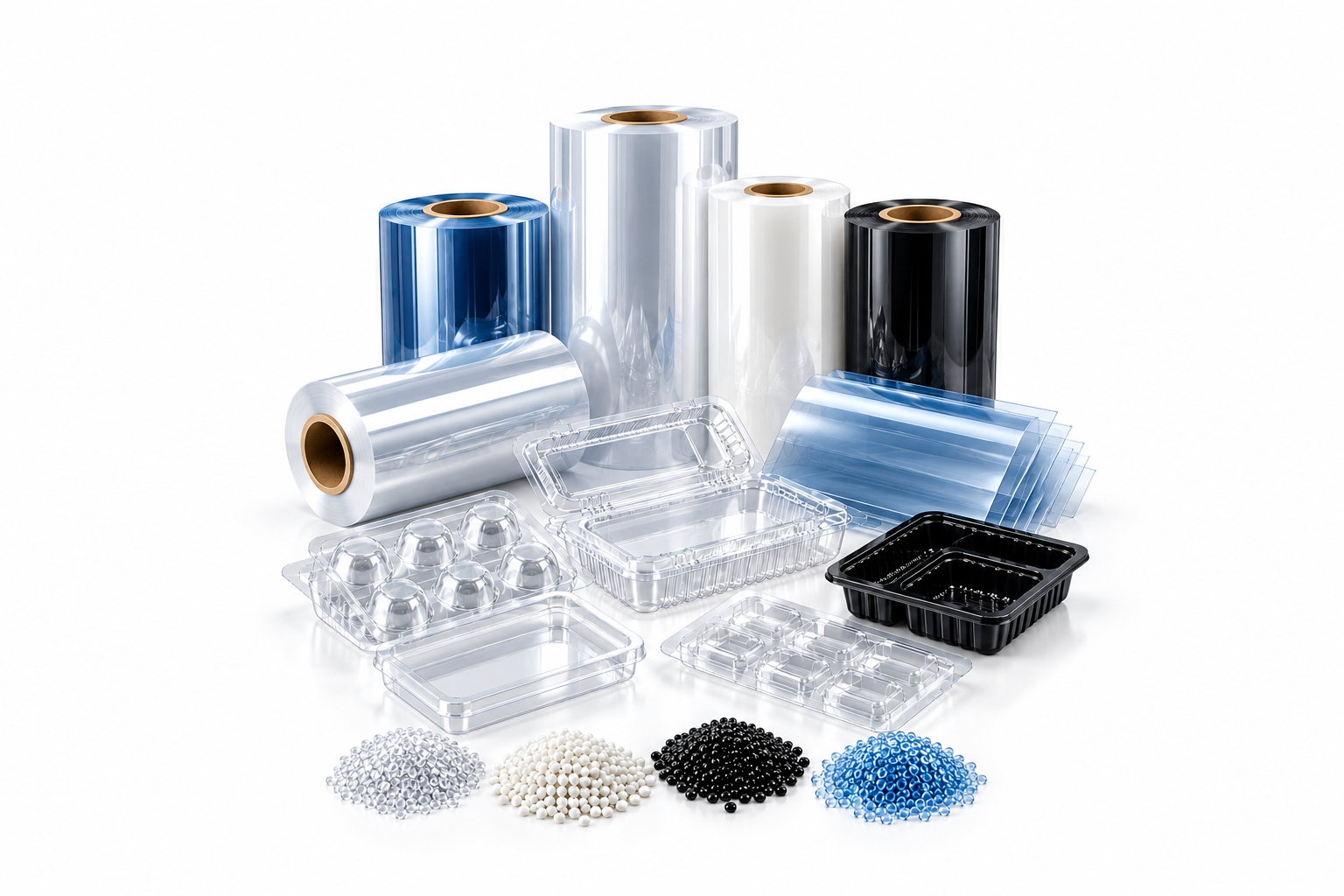
Trizen Packaging is a thermoforming packaging manufacturer in Vapi, India. We use PP, PETG, APET, PVC, PVDC, HIPS, ABS, ESD-modified PP and PETG, and recycled rPET to thermoform custom packaging for pharmaceutical, medical device, automotive, FMCG, cosmetics, electronics, and industrial applications.
We are not a plastic material manufacturer or distributor. The materials on this page are the thermoforming-grade plastics we process at our Vapi facility to make your packaging. Understanding which material we use — and why — helps you brief your requirement correctly and ensures the finished packaging meets your product, regulatory, and commercial requirements.
8 Thermoforming MaterialsWhat We Work With at Vapi
Each material has specific properties that make it the right choice for certain packaging applications. Here's what we use and why:
How to Choose the Right Material for Your Packaging
When you brief a packaging requirement to Trizen Packaging, material selection is part of our design process. These five criteria determine which thermoforming material we use to manufacture your packaging:
| Selection Step | The Question We Answer | Material We Use |
|---|---|---|
| Step 1 — Regulatory — Applied first — rules out incompatible materials | Pharmaceutical primary packaging? → We use pharma-grade PVC or PVDC. Sterile medical device packaging? → We use ETO/Gamma compatible PETG or PP. Food-contact packaging? → We use food-grade PP or APET. ESD-sensitive components? → We use ESD-modified PP or PETG. Standard commercial packaging? → We select the best-fit grade. | Pharma: PVC or PVDC. Medical: PETG or PP. Food: PP or APET food grade. ESD: ESD PP or PETG. Commercial: best-fit grade. |
| Step 2 — Moisture Barrier — Pharmaceutical only | Low drug moisture sensitivity → PVC (WVTR 3.0–5.0 g/m²/day). Moderate sensitivity → PVDC (WVTR 0.5–2.0 g/m²/day). High / hygroscopic → Alu-Alu cold form (<0.1 g/m²/day). | Low: PVC. Moderate: PVDC. High: Alu-Alu. |
| Step 3 — Clarity | Maximum clarity → APET | High clarity → PETG or PVC. Translucent acceptable → PP | Opaque acceptable → HIPS or ABS. | Max: APET · High: PETG/PVC. Translucent: PP · Opaque: HIPS/ABS. |
| Step 4 — Gauge | Thin blister 0.15–0.40mm → PVC, PETG, or APET. Standard tray 0.40–2.00mm → PP, PETG, or HIPS. Heavy structural 2.00–8.00mm → PP, HIPS, or ABS. | Thin: PVC/PETG/APET. Standard: PP/PETG/HIPS. Heavy: PP/HIPS/ABS. |
| Step 5 — Sustainability | EPR obligation or recycled content requirement → We use rPET (30–100% PCR). Food-contact rPET needed → Confirm at brief stage. | Recycled: rPET 30–100% PCR |
Technical Properties ReferenceAll 8 Materials
Reference data for all 8 thermoforming materials we process at Vapi. Confirm exact values against the material batch COA for each production run:
| Material | Forming Temp (°C) | Heat Resist (°C) | Density (g/cm³) | Tensile (MPa) | ETO | Gamma |
|---|---|---|---|---|---|---|
| PP Std / Medical | 150–175 | 115–130 | 0.90–0.91 | 25–40 | ✓ | ✓ |
| PETG Std / Medical | 130–165 | 65–75 | 1.27 | 50–55 | ✓ | ✓ |
| APET Std / Food | 130–165 | 70–80 | 1.33–1.35 | 55–65 | Limited | ✓ |
| PVC Std / Pharma | 150–175 | 60–70 | 1.35–1.40 | 40–55 | ✓ | Limited |
| PVDC Pharma | 155–180 | 60–65 | 1.65–1.75 | 35–50 | ✓ | Limited |
| HIPS Standard | 155–185 | 70–80 | 1.03–1.06 | 20–35 | ✗ | ✗ |
| ABS Standard | 175–210 | 80–100 | 1.03–1.06 | 35–50 | ✗ | ✗ |
| ESD PP / PETG | As base resin | As base resin | Base ± 5% | Similar | ✓ | ✓ |
Sterilization Compatibility and Regulatory Material Grades
For regulated applications, we select the correct material grade and process it under the appropriate production standard. The grade is a specification of the material itself — confirmed on the material manufacturer's COA, which we obtain and pass to you:
| Application | Grade of Material We Use | Why This Grade | Documentation We Provide |
|---|---|---|---|
| Medical device packaging | Medical-grade PETG or PP | Medical-grade material has been biocompatibility-evaluated by the material manufacturer — required for direct medical device contact applications. | Material COA (from material manufacturer) + GMP batch records + Cleanroom Class 8 production records |
| Pharmaceutical blister (OSD) | Pharmaceutical-grade PVC or PVDC | Pharma-grade material is manufactured to pharmacopoeia specification — required for pharmaceutical primary packaging in direct drug contact. | Material COA (from material manufacturer, confirming pharma grade) + GMP batch records + seal integrity records |
| Food-contact packaging | Food-grade PP or APET | Food-grade material manufactured to food-contact compliance standards by the material manufacturer — required for packaging in direct food contact. | Material COA (food-contact grade) + ISO 9001:2015 batch records |
| ESD-sensitive components | ESD-modified PP or PETG (antistatic or conductive) | Protects components from electrostatic discharge during packaging and transit. Grade selected based on application surface resistivity requirement. | ESD material measurement data per batch + ISO 9001:2015 records |
| ETO-compatible packaging | PP, PETG, APET, PVC, PVDC, ESD grades | These materials allow ETO gas penetration — the filled pack can be ETO-sterilized by the device manufacturer after product loading at their facility. | Material COA confirming ETO compatibility |
| Gamma-stable packaging | PP, PETG, APET, ESD grades | Stable at 25–50 kGy gamma dose. We do not use PVC or PVDC for gamma-sterilized medical device packaging — these degrade at higher gamma doses. | Material COA confirming gamma stability |
| Recycled content packaging | rPET 30%, 50%, 75%, or 100% PCR | Required when EPR obligation or brand sustainability commitment mandates documented recycled content in packaging. | PCR chain-of-custody from rPET material manufacturer + production batch records |
Why the Right Material Choice Matters for Your Packaging
Material Selection Design Key Design Requirements
 Click for full photo
01 / Materials control
Regulatory
Applied first — rules out incompatible materials. Pharmaceutical primary packaging? → Pharma-grade PVC or PVDC. Sterile medical device packaging? → ETO/Gamma compatible PETG or PP. Food-contact packaging? → Food-grade PP or APET. ESD-sensitive components? → ESD-modified PP or PETG. Standard commercial packaging? → Best-fit grade. — Pharma: PVC or PVDC · Medical: PETG or PP · Food: PP or APET food grade · ESD: ESD PP or PETG · Commercial: best-fit grade
Frequently Asked QuestionsTrizen manufacturing capabilities
Trizen Packaging is a thermoforming packaging manufacturer — not a material supplier or distributor. We use the following thermoforming-grade materials at our Vapi facility to manufacture custom packaging: PP (standard, medical grade, food grade), PETG (standard and medical grade), APET (standard and food grade), PVC (standard and pharma grade), PVDC (pharma grade for high-barrier pharma blister), HIPS (industrial grade), ABS (standard), ESD-modified PP and PETG (antistatic and conductive grades), and rPET (30–100% PCR). The right material for your application is confirmed as part of the packaging design brief.
Material selection is part of our packaging design brief. Based on your product sample and application requirements, we select material using five criteria: regulatory requirement (pharmaceutical GMP, medical device, food contact, ESD), required moisture barrier (for pharmaceutical blister), clarity requirement, gauge and structural requirement, and any sustainability/recycled content obligation. Material selection is confirmed in writing before tooling begins.
A Certificate of Analysis (COA) is issued by the plastic material manufacturer confirming material identity, grade specification, and batch test results. For regulated pharmaceutical GMP and medical device production batches, we obtain the COA from the material manufacturer for every production run and include it in the documentation package we provide to you. We obtain and pass the COA — the COA is issued by the plastic material manufacturer, not by Trizen Packaging.
ETO compatible materials we use: PP, PETG, APET, PVC, PVDC, ESD-modified PP and PETG. Gamma stable materials we use: PP, PETG, APET, ESD-modified PP and PETG. For medical device packaging requiring both ETO and Gamma compatibility, we use PETG or PP. PVC and PVDC are not used for gamma-sterilized medical device packaging.
Tell Us Your Application — We Select the Right Material
Submit your product sample and application requirement. We confirm the right thermoforming material, production standard, and documentation package — within 24 business hours.